What a Growing Business Automates, and What Graduates Should Ask Before Joining


In this guide
A growing business is one of the most common places for a first graduate job, and one of the least explained. The team is small, the customer list is growing, and the same small jobs keep eating the day: follow-up emails, access requests, task checks and invoices. Automation can take much of that off the team’s plate, and it changes what a graduate is hired to do.
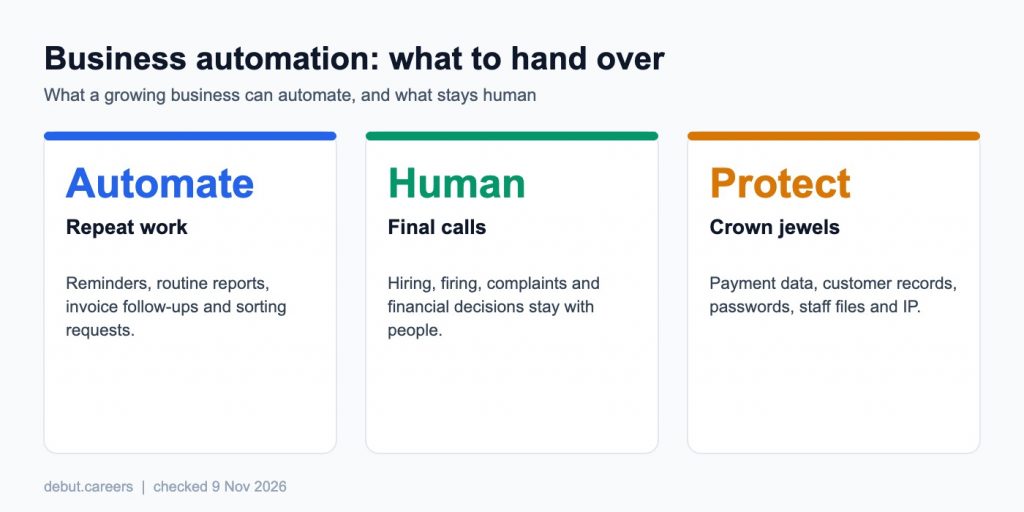
The useful way to see it is simple. Automate repetitive work, and keep people in charge of anything that could damage the business if it goes wrong.
Knowing that rule helps you choose an employer, ask better questions at interview and do well in your first year.
Which Tasks Growing Businesses Automate First
Start with the tasks a team does on repeat: sending reminders, creating basic reports, following up on unpaid invoices and sorting routine requests. These jobs follow clear steps, which is why software can handle the heavy lifting.
For a graduate, the result is more than saved time. You should expect less data-entry style work and more time on creative work, customers and planning. In an interview, ask which tasks in the role are already automated.
Email is worth a look too. A reliable and secure business email setup helps protect files, conversations and account details while keeping things simple, so ask a new employer how it is set up before you start sending client data.
| Task | Verdict | What it means for you |
|---|---|---|
| Reminders and follow-ups | Usually automated | Do not expect this to be your main job |
| Routine reports | Usually automated | You will check and explain them, not build them by hand |
| Unpaid-invoice chasers | Automated, then reviewed | A person approves messages to key clients |
| Sorting routine requests | Automated, then reviewed | Edge cases land with you |
| Customer complaints | Stays with a person | Trust is at stake, a great place to build skills |
| Hiring and firing | Stays with a person | Judgment and legal risk |
| Financial decisions | Stays with a person | A mistake costs money |
Where a Person Still Makes the Call
Do not assume every task will disappear behind an automatic process.
Some areas deserve human attention, including hiring, firing, dealing with customer complaints and making financial decisions. Automation can collect information and send reminders to perform a specific action, but it should never make the final call.
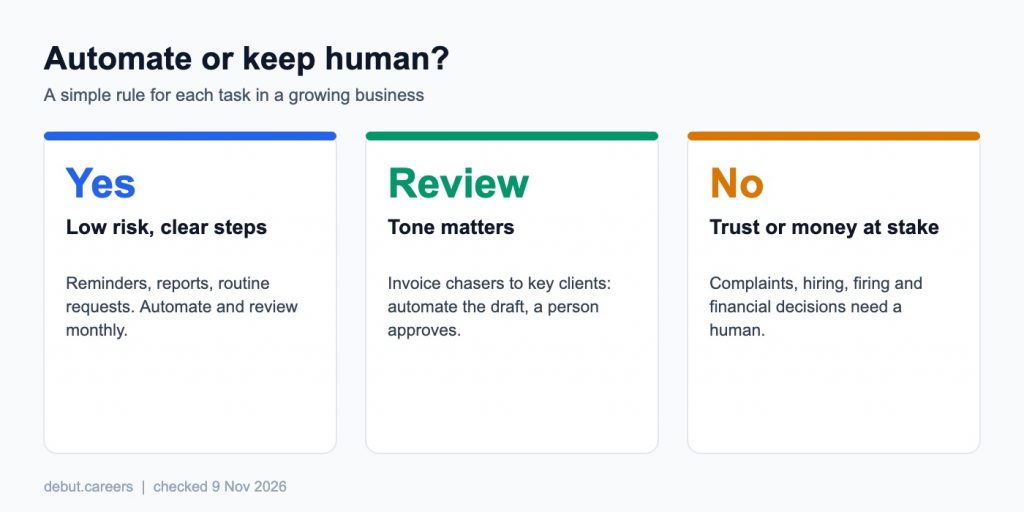
This is where graduates add value. A human can detect an unusual situation that a predefined set of rules might miss, which matters most when a mistake could cost trust, money or a valuable business relationship.
Automation decision helper
Pick a task to see how a growing business usually handles it.
What You Will Be Trusted to Protect
Every growing business has a few things it cannot afford to lose, and a new joiner is often given access to some of them.
Think about the following:
- Payment details
- Customer information
- Passwords
- Employee records
- Intellectual property
All of these need solid protection. Good employers limit who can access them, remove access for people who have left and make sure everyone uses strong passwords. Expect to be asked to do the same.
It also helps to ask how a company rewards people before you accept an offer. Read up on whether bonuses drive lasting engagement and use it to compare employers.
Data you may handle in your first job
Tick what the role could touch.
Questions to Ask Before You Join
Ideally, automation makes work safer. Before a business connects a new tool to its systems, it should ask what information the tool can access and what it can change, and give each tool only the access it needs. If an automated system sends reminders, it probably does not need the record of every customer.
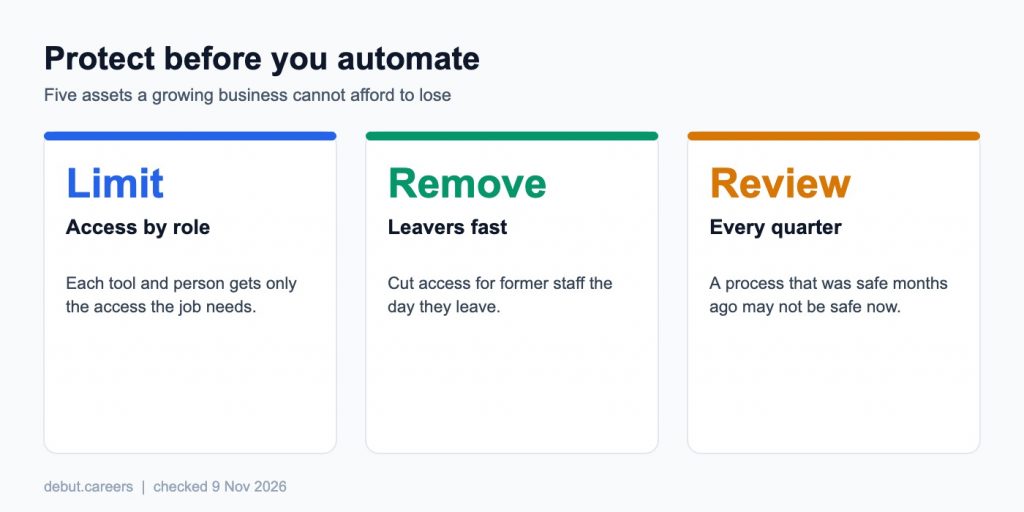
Business needs shift, so automated tasks should be reviewed regularly. A process that was safe a few months ago may not be appropriate today. A company that reviews its processes is usually a safer place to start a career.
Interview questions about automation and data
Adding Up
Automation works best when it removes busy work. Let automation handle predictable tasks, and look for employers who keep people involved where money, trust, judgment and sensitive information are at stake. Those are the roles where graduates learn fastest.
Keep exploring: our Graduate Scheme hub, graduate jobs with any degree, the highest paying graduate salaries and how to budget on a graduate salary.
Business Automation FAQ for Graduates
What do growing businesses automate first?
Repeatable, low-risk jobs: reminders, routine reports, unpaid-invoice follow-ups and sorting routine requests. These follow clear steps, so software handles them well.
Which parts of a graduate job are least likely to be automated?
Anything involving judgment, trust or money: customer complaints, hiring and firing, and financial decisions. Automation can collect information, but a person makes the final call.
What data will I be responsible for in my first job?
Depending on the role, possibly payment details, customer information, passwords, employee records and intellectual property. Access should be limited to what the job needs.
What should I ask about automation at interview?
Which tasks are automated, which decisions stay with people, how access to sensitive data is granted and removed, and how often automated processes are reviewed.
Is secure business email part of data protection?
Yes. A reliable and secure business email setup helps protect files, conversations and account details, so it is a fair question for a new employer.