
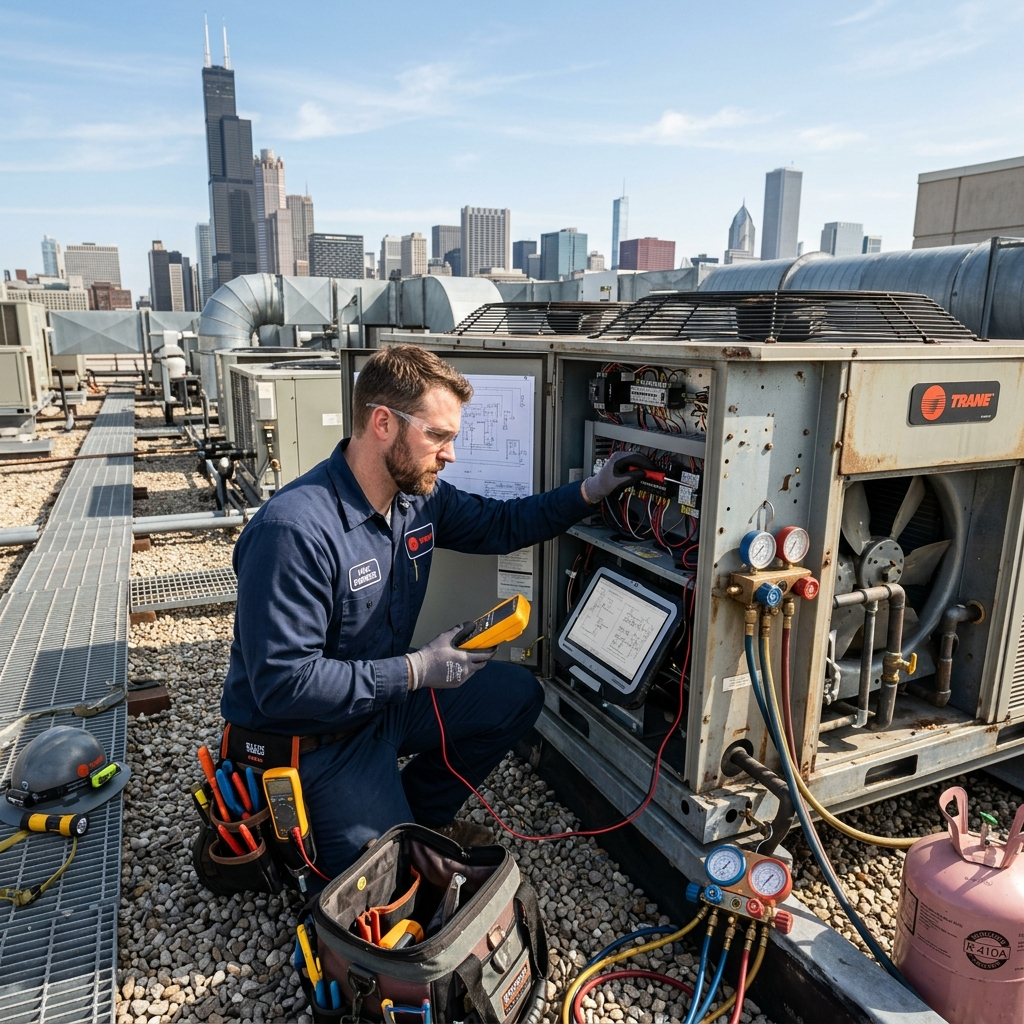
An HVAC engineer in the UK earns about £43,600 on average in advertised jobs, from around £22,000 as an apprentice to £46,000–£61,000 for senior engineers. These are reported market figures; heating, ventilation and air conditioning work is mostly private sector, so there is no official scale.
Apprentice
~£22,000
reported
1–3 years
~£29,700
reported
Average
£43,600
Indeed adverts
Senior
£46k–£61k
8+ years
What moves HVAC pay in the UK
Heat pumps are changing this trade. Engineers with F-Gas certification and heat pump or commercial controls (BMS) experience are in short supply, and that is where the top pay sits, especially in London and the South East. If you are starting out, an apprenticeship with a company that will put you through F-Gas early is worth more than a slightly higher first wage.
HVAC engineer salary by experience
| Stage | Typical pay (reported) |
|---|---|
| Apprentice | about £21,950 |
| 1–3 years | about £29,700 |
| Mid-career | £35,000 – £45,000 |
| Senior (8+ years) | about £45,900, up to £61,300 |
Reported: HVAC FM Recruitment salary guide and Indeed UK, checked 20 Nov 2026. Apprentices must be paid at least £8 an hour in their first year, or the minimum wage for their age after that (GOV.UK).
HVAC engineer take-home pay 2026/27
Overtime and call-out pay are common in maintenance roles and are not included here.
| Gross salary | Take-home a month | Take-home a year |
|---|---|---|
| £29,700 (1–3 years) | £2,075 | £24,904 |
| £43,600 (average) | £2,909 | £34,912 |
| £55,000 (senior) | £3,538 | £42,457 |
England, 2026/27 income tax and National Insurance only. Pension and student loan come off on top. For a full breakdown use our paycheck calculator.
Where HVAC engineers earn most
- Epsom: about £47,500
- Bristol: about £44,900
- Leeds: about £43,900
- London: about £43,700
- Glasgow: about £42,500
Average advertised pay from Indeed UK, reported, checked 20 Nov 2026.
How it compares
HVAC engineer
£43,600 avg
reported
How to become an HVAC engineer in the UK
- Start an apprenticeship such as the Level 3 refrigeration, air conditioning and heat pump engineering technician, or a building services engineering apprenticeship.
- Get F-Gas certification to handle refrigerants; it is a legal requirement for that work.
- Add heat pump installation, controls (BMS) or commercial ventilation experience.
- Move into senior, supervisor or design roles, or work self-employed.
Engineering roles open now
We list graduate and early-career engineering roles with closing dates.
See open roles →See all open graduate rolesWhere to start looking
- Read the mechanical engineering salary guide.
- Browse jobs by city.
- Check your take-home with the paycheck calculator.
Why the adverts and the official figure disagree
Two numbers float around for this job and they rarely match. The National Careers Service puts a refrigeration and air-conditioning installer on about £25,000 as a starter and £45,000 with experience, for a 40 to 48-hour week that can include an on-call rota (National Careers Service, checked 21 Nov 2026). Job adverts sit higher, around the £43,600 average quoted above.
Neither is wrong. Adverts are skewed towards experienced engineers and London jobs, and many include overtime or call-out pay in the headline. The official profile is a typical employed wage. If you are just starting, plan around the lower number and treat anything above it as a bonus for the certificates you collect.
| Figure | What it really describes | Use it for |
|---|---|---|
| £25,000 (NCS starter) | Employed installer, early years | Budgeting your first year |
| £43,600 (adverts) | Mix of experienced roles, often with overtime | Seeing where the market is heading |
| £45,000 (NCS experienced) | Settled engineer on a normal week | Judging a mid-career offer |
The ladder, rung by rung
- Apprentice or trainee installer. You learn pipework, brazing and electrical basics on site. The NCS lists three ways in: an apprenticeship, a college course such as the T Level in Building Services Engineering for Construction, or a higher national certificate or diploma in building services engineering.
- Qualified installer. Your F-Gas certificate is the line between helping and signing off work on systems that use fluorinated refrigerants. Employers notice who gets it early.
- Service and commissioning engineer. Fault-finding pays better than fitting, because fewer people are good at it. Heat pumps and building controls sit here.
- Refrigeration engineer or project lead. The NCS describes this step as designing cooling systems and managing installation projects.
- Your own business or a specialism. Some move into wider building services, some into transport cooling for lorries and cold chains, and some set up on their own.
Three questions to ask before you accept an apprenticeship
- When will you put me through F-Gas? "In year one" is the answer you want.
- Do I go on call, and how is it paid? Call-out pay can add a lot, but it should be written down.
- What kit do I work on? Domestic heat pumps, shops, offices or data centres lead to very different jobs in five years.
If two offers are close on pay, pick the one that teaches you controls and heat pumps. That is where shortages, and the higher salaries, are likely to stay.
Last checked 21 November 2026. Official figures: National Careers Service. Market figures: reported, from job adverts.
The certificates that change what an HVAC engineer can earn
In UK heating, ventilation and air conditioning work, what you are allowed to work on depends heavily on your certificates. Employers often state them in adverts, and they are one of the main reasons two engineers with the same years of experience earn different amounts.
| Certificate or registration | What it lets you do | Who usually needs it |
|---|---|---|
| F-Gas certification | Work on equipment containing fluorinated refrigerant gases, such as air conditioning and heat pumps | Air conditioning and refrigeration engineers |
| Gas Safe registration | Work legally on gas appliances in the UK | Heating engineers working on gas boilers |
| Heat pump installation training | Design and fit air and ground source heat pumps | Engineers moving into low-carbon heating |
| Electrical qualifications | Wire and test controls and units safely | Most installers and service engineers |
The rules on refrigerant gases are set out on GOV.UK's F-gas guidance, and Gas Safe Register explains who must be registered for gas work.
Three ways into the trade
- Apprenticeship. You train on the job with a college course, usually over three to four years, and earn the apprentice wage at first.
- College course then a trainee job. A Level 2 or 3 course gives you the basics, then you join a firm as a mate or trainee.
- Graduate or technical route. Building services engineering degrees lead to design roles rather than installation, with a different pay path.
Where the extra money usually comes from
- On-call and call-out payments for service engineers.
- Overtime during busy seasons, especially summer for air conditioning.
- Commercial work, which often pays more than domestic but involves more travel.
Heat pumps are where much of the new work is going. If you are early in your career, adding refrigerant and heat pump skills to a heating background makes you useful to more employers.
F-gas: the certificate that changes what you can earn
If you want to work on air conditioning, refrigeration or heat pumps in the UK, one qualification matters more than almost any other. Anyone who installs, services, repairs or decommissions equipment that contains fluorinated greenhouse gases (F-gas refrigerants) needs to hold the right certification. Without it, an employer cannot let you handle the refrigerant side of the job. With it, you move from labouring to doing the work that clients pay for.
The rules are set out in GOV.UK guidance on F-gas in refrigeration and air conditioning. Most apprentices take the full category certificate during or soon after their training, and many employers pay for it.
Why heat pumps matter for your career
The UK is moving homes and buildings away from gas boilers, and heat pumps are a big part of that plan. For HVAC engineers this means steady demand for people who can design, install and commission low-carbon heating, not only office air conditioning. Installers who want their customers to access government grants usually need to work under the Microgeneration Certification Scheme (MCS), which is another credential worth knowing about early.
Three ways in
- Apprenticeship: earn while you learn with an employer, usually over three to four years, with a recognised refrigeration, air conditioning and heat pump standard.
- College course plus job: a full-time college qualification, then a trainee role. Faster for some, but you still need on-site experience.
- Graduate engineer: building services engineering degrees lead into design roles with consultancies and contractors. Pay starts higher, but the work is more desk-based.
A realistic five-year picture
Year one is mostly assisting: carrying, learning safe working, watching how an experienced engineer fault-finds. By years two and three you are servicing and fault-finding on your own on simpler systems. Once you hold F-gas and have a few years of commissioning behind you, you can choose a direction: a specialist service engineer, a commissioning engineer on large projects, a supervisor, or self-employment. That choice, more than the first job, decides your pay later on.
Last checked 22 November 2026. Sources: GOV.UK F-gas guidance, MCS.
FAQ
What is the average HVAC engineer salary in the UK?
About £43,600 in advertised jobs (Indeed, reported).
How much do HVAC apprentices earn?
Around £22,000 a year on average, and at least the apprentice minimum wage of £8 an hour in the first year.
How much does an HVAC engineer take home a month?
On £29,700 you keep about £2,075 a month after income tax and National Insurance in England, before pension.
Is HVAC the same as a heating engineer?
Not quite. HVAC covers heating, ventilation and air conditioning, often in commercial buildings. Domestic heating engineers usually focus on boilers and, increasingly, heat pumps.
Sources
- HVAC FM Recruitment salary guide (reported, checked 20 Nov 2026)
- Indeed UK (reported, checked 20 Nov 2026)
- GOV.UK: minimum wage rates