
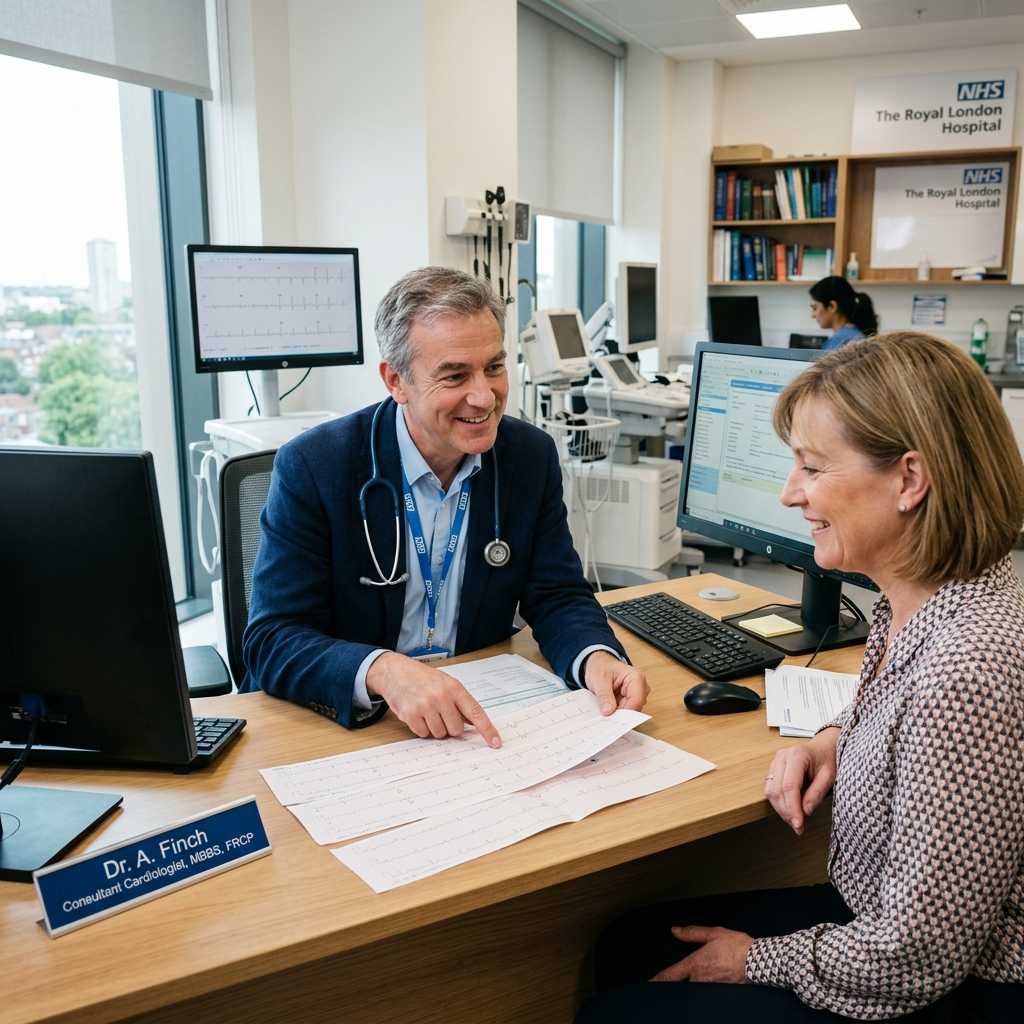
A cardiologist in the NHS in England earns £113,565 to £150,569 as a consultant in 2026/27, after years on the resident doctor scale from £41,226. Pay is national, so the main driver is how many years you have served. This guide gives every grade, the training route and what is not yet confirmed.
Cardiologist salary UK 2026/27 by grade
Cardiologists are paid on the same national NHS doctor scales as other hospital specialties.
| Grade or point | Salary 2026/27 | Note |
|---|---|---|
| Foundation Year 1 (FY1) | £41,226 | Year after medical school |
| Foundation Year 2 (FY2) | £47,610 | |
| ST1/ST2 or CT1/CT2 | £55,355 | First two years of specialty or core training |
| ST3/CT3 | £67,325 | |
| ST4 to ST5 | £67,998 | |
| ST6 | £76,582 | |
| ST7 to ST8 | £77,348 | Check the BMA scale for your exact nodal point |
| Consultant, thresholds 0 to 2 | £113,565 | Starting salary |
| Consultant, threshold 3 | £120,249 | |
| Consultant, thresholds 4 to 7 | £123,672 | |
| Consultant, thresholds 8 to 13 | £135,645 | |
| Consultant, thresholds 14 to 19 | £150,569 | Top of the scale |
Source: NHS Employers pay circular M&D 1/2026 R2 (3.5% award from 1 April 2026) and the BMA resident doctor scale. Basic pay only. We do not quote private-practice earnings because we found no official source.
Cardiologist pay point picker
How to become a cardiologist in the UK
Cardiology is not a run-through specialty: you train in internal medicine first.
- Medical degree: 5 to 6 years, or 4 years for graduate entry.
- Foundation programme: 2 years.
- Internal medicine training: reported to be 3 years ending with full MRCP(UK) exams, as set by the Joint Royal Colleges of Physicians Training Board.
- Cardiology specialty training: follows the 2022 GMC-approved curriculum, reported to run about five years alongside general internal medicine. Check the JRCPTB cardiology page for the current length, because we could not confirm the exact total.
- Consultant post: you can apply about six months before your certificate of completion of training (NHS Health Careers).
What cardiologists say about the job
“I didn’t choose the heart – it chose me!”
Dr Shelley Rahman Haley, consultant cardiologist, Royal Brompton and Harefield (29 September 2020). One person’s view. Source
Costs, hours and job market
Registration: the annual GMC fee with a licence to practise is £481 from 1 April 2026, up from £463. Recent graduates can pay a discounted £184 fee.
Hours: a full-time consultant job plan is 10 programmed activities of four hours, a 40-hour contracted week. Resident doctors work rotas that include nights and weekends, so we do not quote one weekly figure.
Job market: NHS Health Careers says prospects, especially for medical registrars, have been affected by oversupply. The page is undated, so check current consultant vacancies before relying on it.
What moves your pay: time served, on-call work, locum shifts and additional programmed activities. Location does not change the national consultant scale.
Cardiologist salary FAQ
How much does a cardiologist earn in the UK?
An NHS consultant in England earns £113,565 to £150,569 basic pay in 2026/27 depending on years served.
How long does it take to become a cardiologist?
Medical school, a 2-year foundation programme, internal medicine training and cardiology training. We could not confirm the exact total from an official page, so check the JRCPTB curriculum.
Do cardiologists earn more privately?
Possibly, but we found no official source for private earnings, so we do not quote a figure.
What is the GMC fee?
£481 a year with a licence to practise from 1 April 2026.
Sources and further reading
- NHS Employers pay circular for doctors, M&D 1/2026 R2 (July 2026)
- BMA pay scales for resident doctors in England
- BMA pay scales for consultants in England
- GMC fees for doctors
- NHS Health Careers: cardiology
- JRCPTB cardiology training
Related on Debut: Graduate schemes hub | Paediatrician salary | Anaesthetist salary | Neurosurgeon salary | Radiology tech salary
Updated November 2026. Figures are England 2026/27 basic pay; Scotland, Wales and Northern Ireland publish their own scales.